If you’ve spent any time in a dermatologist’s office, you’ve heard the name SkinCeuticals C E Ferulic. It’s the serum derms actually recommend, not just sell, and at ~$182 for 30ml, it’s priced like it knows that.
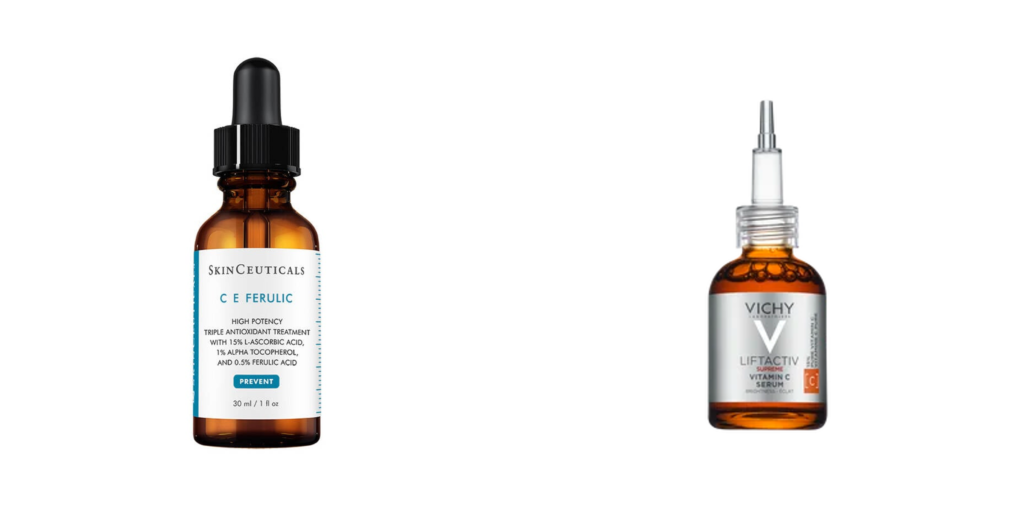
Meanwhile, sitting quietly at Target and CVS, there’s Vichy’s LiftActiv 16% Pure Vitamin C Brightening Serum at ~$46 for 20ml. Both brands live under L’Oréal’s roof. Both are chasing the same job: a stable, high-potency Vitamin C antioxidant serum.
That’s roughly a 4.5x price gap. So does the “gold standard” actually out-perform its drugstore relative, or are you mostly paying for the derm-office reputation? I lined up both CosDNA ingredient breakdowns to find out.
The At-A-Glance Breakdown
| SkinCeuticals C E Ferulic | Vichy LiftActiv 16% Vitamin C Serum | |
|---|---|---|
| Price & Volume | ~$182 / 30ml | ~$46 / 20ml |
| Core Antioxidants | 15% L-Ascorbic Acid, 1% Alpha Tocopherol, 0.5% Ferulic Acid | 16% Ascorbic Acid, Tocopherol |
| Supporting Actives | Panthenol, Sodium Hyaluronate | Haematococcus Pluvialis (Astaxanthin), Carnosine, Dipotassium Glycyrrhizate |
| Formulation Style | Clinical, minimalist antioxidant treatment | Antioxidant serum layered with soothing and anti-glycation actives |
Why SkinCeuticals Commands the “Gold Standard” Title
SkinCeuticals didn’t earn its derm-office reputation from marketing. It earned it from a specific, patented combination that’s been studied for over two decades: 15% L-Ascorbic Acid, 1% Alpha Tocopherol, and 0.5% Ferulic Acid, often nicknamed the “C E Ferulic” holy trinity.
This isn’t just three antioxidants tossed in the same bottle. The published research behind this exact ratio shows the trio works synergistically, meaning the ferulic acid stabilizes the vitamin C and boosts the combined antioxidant protection well beyond what any single ingredient offers alone. That stability angle matters because L-ascorbic acid is famously finicky and degrades fast once exposed to air and light.
The formula itself stays deliberately minimalist. Beyond the trinity, you’re mostly looking at Panthenol and Sodium Hyaluronate rounding things out. No frills, no extra actives competing for attention, just a concentrated, clinically-validated antioxidant delivery system.
Vichy’s Streamlined (But Different) Approach
Pull up the Vichy ingredient list and the headline numbers look shockingly close: 16% Ascorbic Acid alongside Tocopherol (Vitamin E). On paper, that’s a comparable, even slightly higher, Vitamin C concentration than SkinCeuticals.
Here’s the catch: there’s no Ferulic Acid anywhere on Vichy’s ingredient list. That patented stabilizing synergy simply isn’t part of this formula, so you’re getting straightforward Vitamin C plus E, not the specific three-way antioxidant boost SkinCeuticals is known for.
What Vichy does instead is stack in its own supporting cast. Haematococcus Pluvialis Extract is an algae-derived source of astaxanthin, one of the more potent antioxidant carotenoids around. Carnosine brings anti-glycation benefits, meaning it helps defend collagen against the sugar-related damage that contributes to premature aging. And Dipotassium Glycyrrhizate, a licorice-root derivative, adds a soothing, anti-irritant layer that SkinCeuticals’ formula doesn’t include.
The Verdict: Different Antioxidant Strategies, Different Budgets
Both of these are legitimately strong Vitamin C serums. The real question is which mechanism you’re actually shopping for.
Get SkinCeuticals if: you want the scientifically-validated, patent-backed C E Ferulic synergy specifically, the one with decades of published environmental-protection and collagen-defense data behind it. If serious anti-aging and pollution defense are the priority and budget isn’t the deciding factor, this is where that reputation is genuinely earned.
Get Vichy if: your goal is a high-potency, pure Vitamin C serum for daily brightening and general antioxidant defense, with some nice anti-glycation and soothing extras layered in, and you’d rather not drop close to $200 to get there. It’s not chasing the same patented trio, but it’s a legitimately capable formula in its own right.
Neither one is “fake” here. They’re two different antioxidant philosophies wearing the same L’Oréal family badge. Which one matches what your skin’s actually asking for?
Disclaimer: The information and ingredient analysis provided in this article are for educational and informational purposes only. Everyone’s skin type and condition are different; readers should carefully assess their own individual needs and conduct a patch test before purchasing or using any new skincare. Every product has its unique formulation and characteristics. For specific product inquiries or claims, please contact the respective brand directly. For professional dermatological advice, diagnoses, or skin concerns, always consult a board-certified dermatologist or qualified healthcare professional.