This one’s a genuine classic matchup: the boutique-pharmacy darling Kiehl’s Ultra Facial Cream (~$78 for 125ml) against the dermatologist-office staple CeraVe Moisturising Cream (~$18 for 177ml). That’s a 4.3x price gap between two creams that both get called “the best moisturizer I own” in roughly equal measure online.
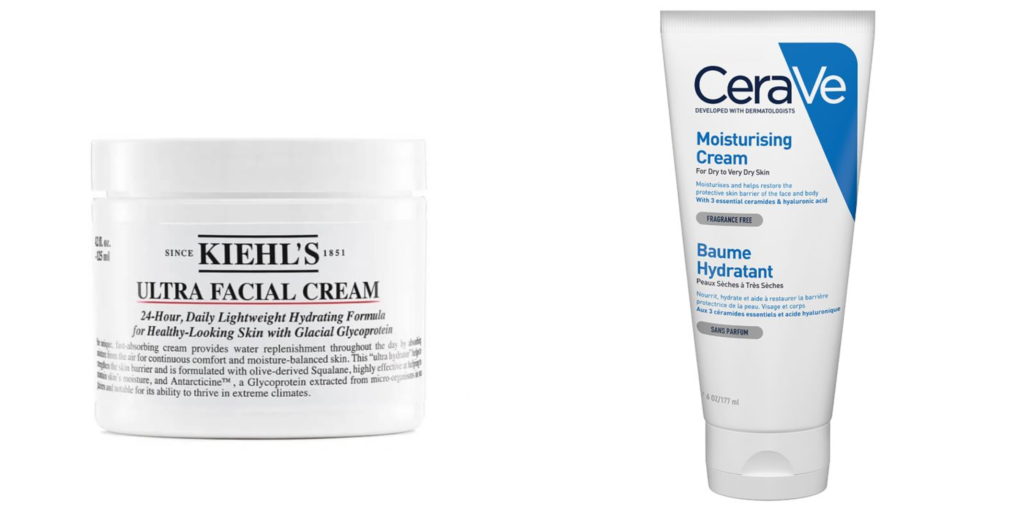
We pulled both full INCI lists to see if this is a real dupe situation or two genuinely different creams that just happen to be popular for the same reason.
The At-a-Glance Breakdown
| Kiehl’s Ultra Facial Cream | CeraVe Moisturising Cream | |
|---|---|---|
| Price & Volume | ~$78 / 125ml | ~$18 / 177ml |
| Core Occlusives/Emollients | Squalane, Dimethicone | Petrolatum, Dimethicone, Cetearyl Alcohol |
| Unique Star Actives | Pseudoalteromonas Ferment Extract (glacial glycoprotein), Avocado/Apricot/Olive/Sweet Almond oils | Ceramide NP, Ceramide AP, Ceramide EOP, Cholesterol, Phytosphingosine |
| Best For | Normal to dry skin wanting a lightweight, makeup-friendly finish | Very dry, compromised, or eczema-prone skin needing heavy-duty repair |
The Shared Baseline: A Fragrance-Free Hydration Foundation
Before we get into what makes each one special, let’s give credit where it’s due — both are doing the fundamentals right.
Neither formula contains fragrance, which is a genuine win for anyone with reactive or sensitive skin. Both lean on Glycerin and Dimethicone for that reliable base-level hydration and smoothing, and both include Tocopherol (Vitamin E) for antioxidant support. This is the “you really can’t go wrong with either” foundation — the differences show up in what’s built on top of it.
Kiehl’s: Botanical Oils Meet a Glacial Star Ingredient
Kiehl’s built its reputation on a texture that reads rich but wears light, and the ingredient list explains exactly how.
Notably, there’s no petrolatum here. Instead, the barrier-supporting job goes to Squalane plus a genuinely stacked botanical oil blend: Avocado Oil (Persea Gratissima), Apricot Kernel Oil, Olive Fruit Oil, and Sweet Almond Oil (Prunus Amygdalus Dulcis). That’s four different plant oils working together for a soft, cosmetically elegant finish that layers well under makeup.
The real signature move, though, is Pseudoalteromonas Ferment Extract — often marketed as “glacial glycoprotein.” It’s derived from a bacteria found in extreme cold-water environments and is included for its moisture-retention properties, which is the ingredient Kiehl’s built its whole “survives Arctic conditions” marketing story around.
CeraVe: The Clinical Ceramide Rebuild
CeraVe takes a completely different engineering approach — less about elegant texture, more about literally rebuilding what your skin barrier is missing.
Petrolatum sits well up the ingredient list here, doing serious work to prevent transepidermal water loss — it’s one of the most effective occlusives that exists, full stop. But the headline feature is CeraVe’s patented three-ceramide complex: Ceramide NP, Ceramide AP, and Ceramide EOP. These are lipids your skin barrier naturally contains but loses with age, dryness, and damage.
That ceramide trio is backed up by Cholesterol and Phytosphingosine — together, these four ingredients mimic your skin’s own natural lipid ratio — plus Sodium Hyaluronate for an added hydration layer. This is the formula dermatologists reach for first when someone’s dealing with a genuinely compromised barrier.
The Verdict: Functional Alternatives, Not Identical Twins
Here’s the honest call: these aren’t exact dupes, they’re two different tools for two different jobs.
Choose Kiehl’s if: you have normal to dry skin and want a cosmetically elegant, fast-absorbing cream that layers beautifully under makeup, powered by botanical oils and that glacial glycoprotein star ingredient.
Choose CeraVe if: you have severely dry, compromised, or eczema-prone skin and need clinical-grade ceramide repair. At $18 for 177ml, it’s genuinely hard to beat on both performance and price for barrier-repair purposes.
Both are excellent — they just built their reputations solving slightly different problems. Which one is currently living on your bathroom counter?
Disclaimer: The information and ingredient analysis provided in this article are for educational and informational purposes only. Everyone’s skin type and condition are different; readers should carefully assess their own individual needs and conduct a patch test before purchasing or using any new skincare. Every product has its unique formulation and characteristics. For specific product inquiries or claims, please contact the respective brand directly. For professional dermatological advice, diagnoses, or skin concerns, always consult a board-certified dermatologist or qualified healthcare professional.