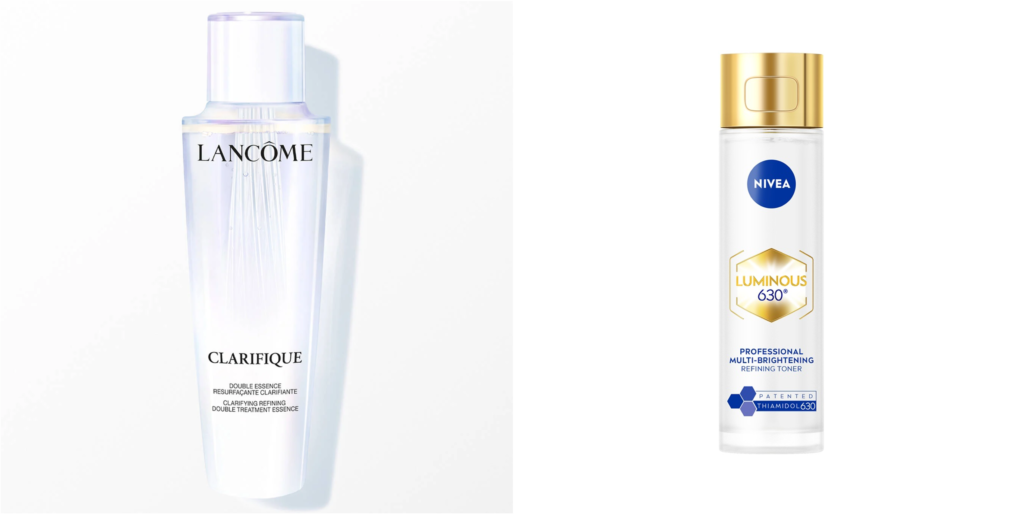
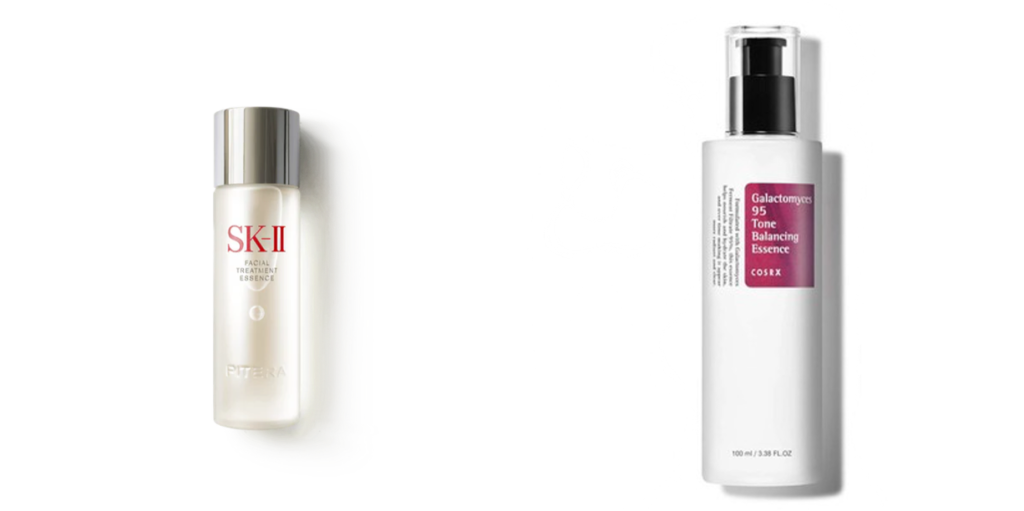
Every beauty editor has written the La Mer vs. Nivea story. Almost none of them have actually run the ingredient-matching math. We did. The number we got is bigger than we expected — and it’s not the one floating around the internet.
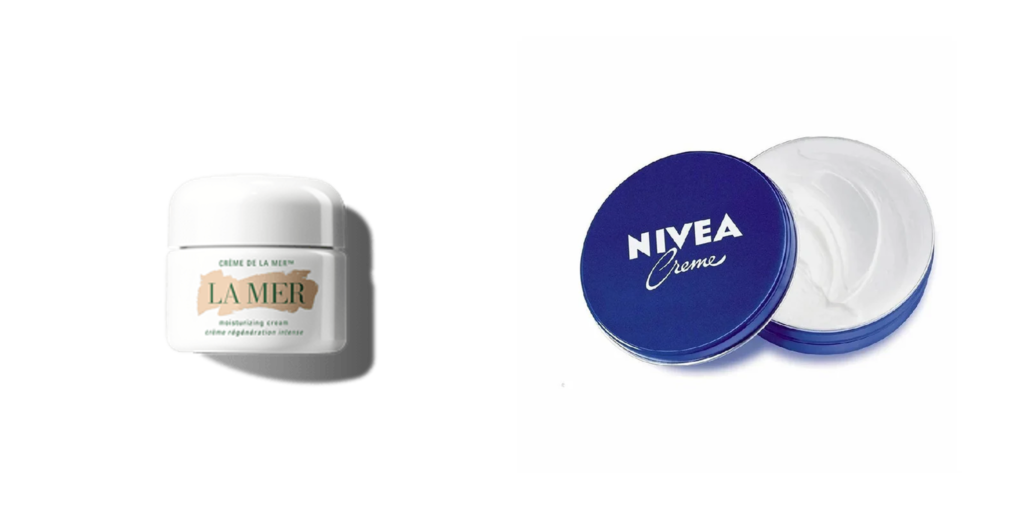
The $375+ Difference
A small tin of Nivea Creme costs about $5–8. A 2oz jar of Crème de la Mer costs $450 at full retail. That’s not a price gap, that’s a price canyon.
So the question everyone actually wants answered: does the $5 tin work anywhere near as hard as the $450 jar?
The Mathematical Truth (Let’s Show Our Work)
Here’s the formula: similarity = (shared ingredients ÷ total ingredients) × 100
Nivea Creme’s full ingredient list (13 ingredients, excluding fragrance) is: Water, Mineral Oil, Microcrystalline Wax, Glycerin, Lanolin Alcohol, Paraffin, Panthenol, Magnesium Sulfate, Decyl Oleate, Octyldodecanol, Aluminum Stearates, Citric Acid, and Magnesium Stearate.
Cross-referencing every single one of those against La Mer’s full CosDNA ingredient panel, here’s what actually matches under identical INCI names:
| Shared Ingredient | In Nivea | In La Mer |
|---|---|---|
| Water | ✅ | ✅ |
| Mineral Oil | ✅ | ✅ |
| Microcrystalline Wax | ✅ | ✅ |
| Glycerin | ✅ | ✅ |
| Lanolin Alcohol | ✅ | ✅ |
| Paraffin | ✅ | ✅ |
| Panthenol | ✅ | ✅ |
| Magnesium Sulfate | ✅ | ✅ |
| Decyl Oleate | ✅ | ✅ |
| Octyldodecanol | ✅ | ✅ |
| Citric Acid | ✅ | ✅ |
| Magnesium Stearate | ✅ | ✅ |
That’s 12 out of Nivea’s 13 ingredients appearing verbatim in La Mer’s formula — a 92% match. (The 13th, Aluminum Stearates, has a close cousin in La Mer’s Aluminum Distearate — same chemical family, not an identical INCI match, so we didn’t count it.)
Flip the math around and look at it from La Mer’s side: those same 12 ingredients make up roughly 41% of La Mer’s full ~29-ingredient formula. So depending which bottle you’re standing in front of, the “same formula” story is either overwhelming (92%) or a supporting cast member (41%). Both numbers are true. That’s the trick of ingredient-overlap math — and exactly why “X% similar” headlines need the full picture, not just one side’s fraction.
The Shared Blueprint (What That 92% Is Actually Doing)
This shared core isn’t decorative — it’s the entire mechanism both creams rely on to work:
- Mineral Oil + Microcrystalline Wax — the occlusive duo that seals moisture into skin and prevents water loss. This is the real workhorse of both formulas.
- Glycerin — a humectant that pulls water into the skin’s surface layer.
- Lanolin Alcohol — an emollient and emulsifier that smooths and softens.
- Panthenol (Provitamin B5) — soothing, barrier-supporting, genuinely useful in any concentration.
- Paraffin, Magnesium Sulfate, Citric Acid, Decyl Oleate, Octyldodecanol, Magnesium Stearate — the supporting texture, pH-balancing, and thickening crew that makes the cream feel like a cream.
If your skin just needs a rich, occlusive barrier repair cream, this shared blueprint is doing 92% of the job in the $5 tin.
The La Mer Magic (What Your Extra $445 Buys)
To be fair to La Mer: that remaining ~59% of its formula isn’t filler.
- Algae Extract sits second on La Mer’s ingredient list — this is the INCI name for the brand’s famous Miracle Broth, a fermented sea kelp complex that’s the actual foundation of La Mer’s entire brand mythology and 3–4 month fermentation process.
- A botanical oil complex — Sesame Seed Oil, Eucalyptus Globulus Leaf Oil, Sunflower Seedcake, and Sweet Almond Seed Meal add nourishment and gentle exfoliation that Nivea’s formula doesn’t attempt.
- A mineral cocktail — Copper, Zinc, Calcium, and Magnesium Gluconate are trace mineral compounds included for skin-conditioning support, layered in alongside Niacin (Vitamin B3) and Tocopheryl Succinate (a Vitamin E derivative) for antioxidant backup.
None of this is snake oil — it’s a genuinely more complex, more actively-dosed formula. Whether it’s worth 90x the price is a separate question from whether it’s “real.”
The Verdict: Is It a Dupe?
For pure barrier repair and occlusive hydration on very dry skin? Yes — Nivea is a near-exact textural and functional dupe. The shared 92% is doing the heavy lifting in both jars.
What Nivea can’t replicate is the fermented algae complex, the botanical oil blend, and the trace-mineral cocktail that make up La Mer’s remaining share of the formula — the parts responsible for its anti-aging and “wound healing” reputation specifically.
Buy Nivea if: you want serious barrier repair and moisture-sealing for dry, cracked, or compromised skin, and you don’t need the extras.
Buy La Mer if: you want the algae ferment complex and botanical actives on top of that same occlusive base, and the budget is genuinely not a concern.
Either way — next time someone tells you La Mer is “just Nivea in fancy packaging,” you can tell them it’s actually 92% true. Just don’t forget to mention what’s hiding in that other 8%.
Disclaimer: The information and ingredient analysis provided in this article are for educational and informational purposes only. Everyone’s skin type and condition are different; readers should carefully assess their own individual needs and conduct a patch test before purchasing or using any new skincare. Every product has its unique formulation and characteristics. For specific product inquiries or claims, please contact the respective brand directly. For professional dermatological advice, diagnoses, or skin concerns, always consult a board-certified dermatologist or qualified healthcare professional.