Another viral infographic, another “dupe” claim that doesn’t hold up under an ingredient list. This time it’s Kiehl’s Ultra Facial Oil-Free Gel Cream (~$43 for 50ml) versus Neutrogena Hydro Boost Water Gel (~$20 for 50g) — two blue jars, a 2.2x price gap, and a claim that they’re functional dupes because they “share Sodium Hyaluronate” as their core hydrator.
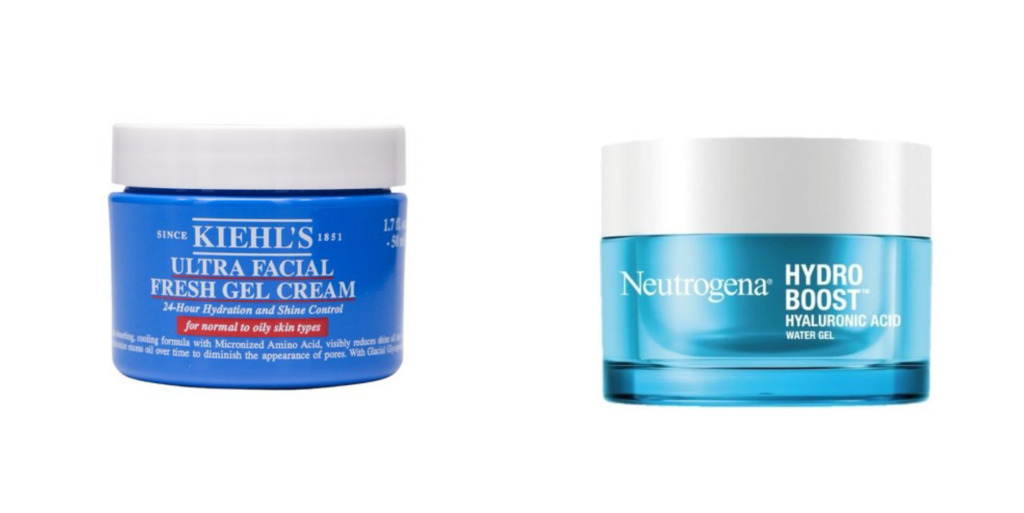
We checked the actual CosDNA lists. That claim doesn’t survive contact with the ingredient panel. Here’s what’s really going on.
The At-a-Glance Breakdown
| Kiehl’s Oil-Free Gel Cream | Neutrogena Hydro Boost | |
|---|---|---|
| Price & Volume | ~$43 / 50ml | ~$20 / 50g |
| True Core Hydrators | Glycerin, Propanediol, Dimethicone | Glycerin, Sodium Hyaluronate |
| Unique Active Ingredients | Sarcosine, Salicylic Acid (BHA), Menthoxypropanediol | Fragrance, Blue 1, Olive-derived emulsifiers |
| Formulation Goal | Oil control + gentle pore exfoliation | Simple, non-greasy water-locking hydration |
Myth-Busting Time: Where’s the Hyaluronic Acid?
Here’s the part that should stop you mid-scroll: Kiehl’s Oil-Free Gel Cream does not contain Sodium Hyaluronate at all. Check the full list — it’s simply not there.
Neutrogena, on the other hand, genuinely does contain Sodium Hyaluronate, sitting comfortably mid-list. So the viral claim gets it backwards — only one of these two jars is actually using hyaluronic acid as a hydrator.
What is Kiehl’s using instead? Glycerin and Propanediol do the heavy lifting for water-pulling hydration, while a notably heavy dose of Dimethicone (plus Dimethiconol) delivers that silky, water-burst glide. Both formulas lean hard on silicones for texture — that part of the “they feel similar” claim is legitimate. The ingredient sourcing the hydration, though, is completely different between the two.
Kiehl’s True Identity: This Is an Active Treatment Gel
Once you stop expecting hyaluronic acid, Kiehl’s formula reveals what it’s actually built to do — and it’s not simple hydration.
It contains Sarcosine, included for sebum-control support, and Salicylic Acid, a BHA that gently exfoliates inside the pore rather than just on the surface. There’s also Menthoxypropanediol, a cooling agent responsible for that refreshing tingle on application. Put together, this isn’t a basic moisturizer — it’s an active gel specifically engineered for oily, congestion-prone, breakout-tendency skin.
Neutrogena’s Approach: Straightforward Water-Locking
Neutrogena keeps things simpler, and there’s nothing wrong with that.
It’s a silicone-heavy water gel built around Sodium Hyaluronate for moisture retention, with Cetearyl Olivate and Sorbitan Olivate — olive-derived emulsifiers — holding the formula together. Worth flagging for sensitive-skin readers: it does contain Fragrance and Blue 1 dye, both common (and generally well-tolerated) but worth knowing about if you’re avoiding either.
The Verdict: Similar Jars, Genuinely Different Jobs
These aren’t dupes. They just happen to look alike in blue plastic.
Choose Kiehl’s if: you have oily or congestion-prone skin and want a gel that actively controls shine while gently exfoliating pores with BHA. You’re paying the extra $23 for real active ingredients, not just texture.
Choose Neutrogena if: you want a basic, refreshing, non-greasy hydration layer and don’t mind a touch of fragrance and dye. At $20, it does exactly what it promises — simple water-locking, nothing more.
So next time an infographic tells you two products are “basically the same,” check the actual ingredient list first. Nine times out of ten, the real story is more interesting than the shortcut.
Disclaimer: The information and ingredient analysis provided in this article are for educational and informational purposes only. Everyone’s skin type and condition are different; readers should carefully assess their own individual needs and conduct a patch test before purchasing or using any new skincare. Every product has its unique formulation and characteristics. For specific product inquiries or claims, please contact the respective brand directly. For professional dermatological advice, diagnoses, or skin concerns, always consult a board-certified dermatologist or qualified healthcare professional.