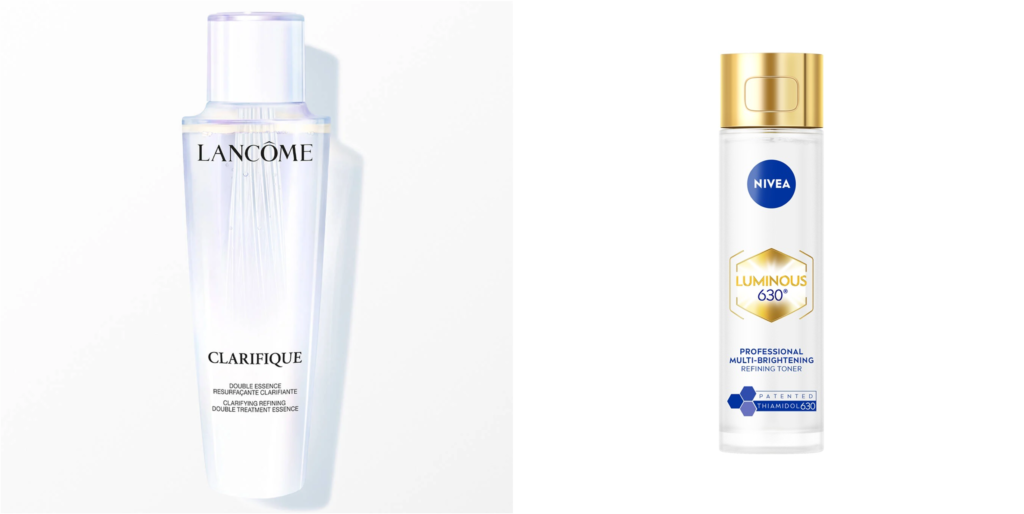
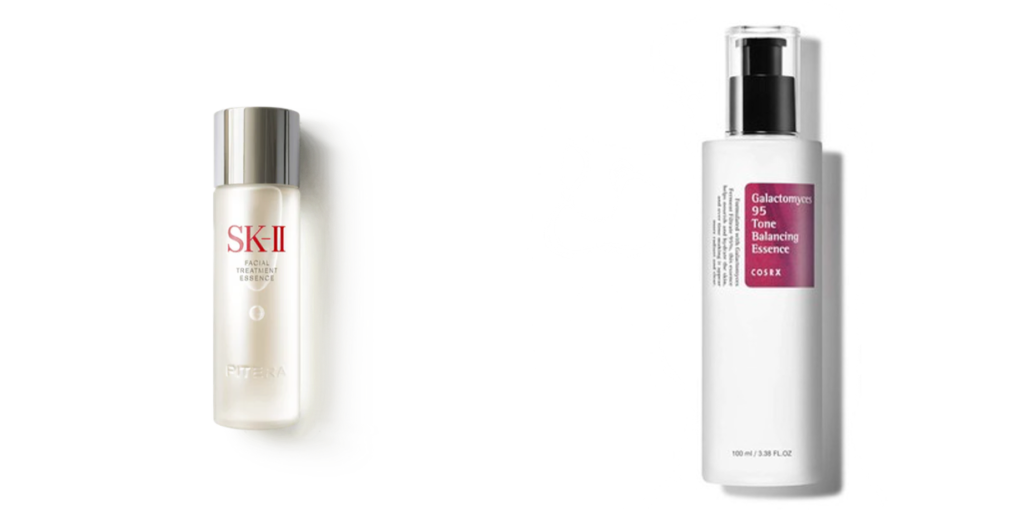
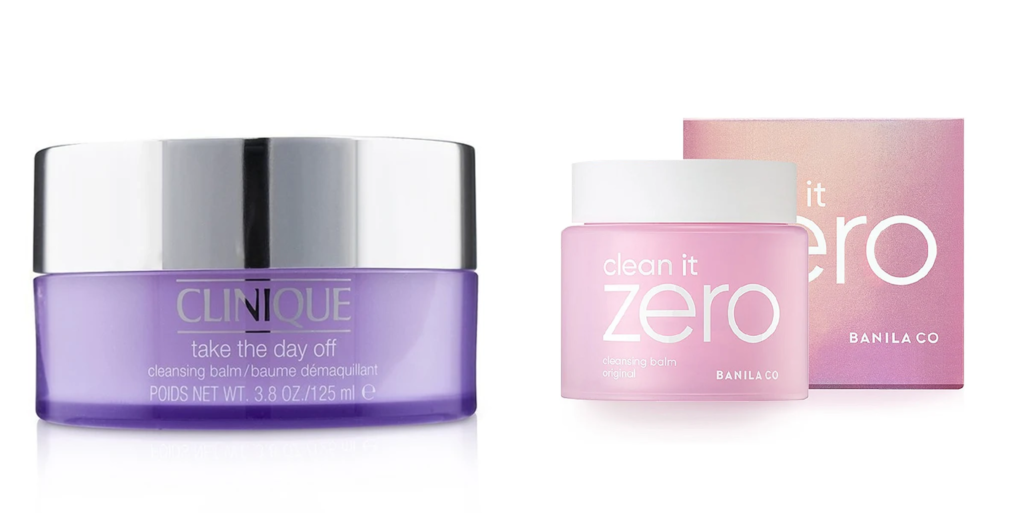
Hunting for a Clinique cleansing balm dupe? A viral infographic says Clinique Take The Day Off and Banila Co Clean It Zero share the same makeup-melting base ester, Ethylhexyl Palmitate. Sounds like a slam-dunk.
We pulled both INCI lists from CosDNA. One of them doesn’t contain it at all.
So is the $10 pink jar still worth your money? The answer depends a lot more on your skin than on that one ingredient.
The Price Gap & The Viral Myth
Here’s the US price tag on each:
- Clinique Take The Day Off Cleansing Balm: ~$41 USD for 125ml
- Banila Co Clean It Zero Original Cleansing Balm: ~$10 USD for 100ml
The infographic screams 4.1x. That’s the sticker gap, and it flatters the dupe.
Do the volume math and Clinique gets a small break, since you get 25ml more product:
- Clinique: about $32.80 per 100ml
- Banila Co: about $10.00 per 100ml
Real gap: roughly 3.3x. Still big, just not quite as dramatic.
The viral claim says that shared base ester is what makes Banila Co a true Clinique cleansing balm dupe. Let’s test that.
The At-a-Glance Comparison
| Product | Price (USD) & Volume | The REAL Base Ester | Texture/Structure Ingredient | Fragrance/Botanicals |
|---|---|---|---|---|
| Clinique Take The Day Off | ~$41 / 125ml | Ethylhexyl Palmitate | Polyethylene | No fragrance listed; Safflower Seed Oil only |
| Banila Co Clean It Zero Original | ~$10 / 100ml | Cetyl Ethylhexanoate (+ Ethylhexyl Stearate) | Synthetic Wax | Fragrance + Olive, Jojoba, Acerola, Vitamin C |
Myth-Busting the INCI: They Don’t Share the Base
Here’s what the labels say:
- Clinique opens with Ethylhexyl Palmitate, the #1 ingredient
- Banila Co has no Ethylhexyl Palmitate anywhere. It opens with Cetyl Ethylhexanoate, followed by Ethylhexyl Stearate
The structure ingredients don’t match either. Clinique thickens with Polyethylene, while Banila Co uses Synthetic Wax.
So the literal claim is false. But here’s the twist the infographic missed: these are close cousins. Ethylhexyl Palmitate, Cetyl Ethylhexanoate, and Ethylhexyl Stearate are all lightweight synthetic esters used to dissolve oil-based makeup and sunscreen.
There’s another family resemblance. Both balms use a PEG-glyceryl triisostearate emulsifier, so the balm turns milky when you add water. Clinique uses PEG-5, Banila Co uses PEG-20.
Different molecules, same job. That’s why the two feel similar, even if the shared-ingredient claim doesn’t hold up.
Clinique’s Minimalism: Why $41 Buys Peace of Mind
Clinique’s ingredient list is short. Nine ingredients, and no fragrance among them.
After the lead ester, you get Safflower Seed Oil and Caprylic/Capric Triglyceride (both emollients that help the balm melt and spread). Sorbeth-30 Tetraoleate and PEG-5 Glyceryl Triisostearate handle the emulsifying. Tocopherol (Vitamin E) adds an antioxidant, and Phenoxyethanol keeps the jar preserved.
There are no essential oils and no botanical extracts to react to. That’s the entire selling point: fewer things on the label means fewer things your skin can get mad at.
One flag for breakout-prone skin. CosDNA scores Ethylhexyl Palmitate at 4 on its acne scale, and it’s ingredient #1. Balms are rinse-off products, so thorough rinsing matters, and CosDNA’s scores are a rough guide, not a verdict.
Banila Co’s Botanical Sorbet: The Skincare-Infused Balm
Banila Co takes the same basic balm idea and dresses it up.
After its ester base, you’ll find:
- Olive Fruit Oil and Jojoba Seed Oil for extra slip
- Acerola Extract (Malpighia Glabra), Pomegranate, and Cranberry extracts
- Gromwell Root Extract (Lithospermum Erythrorhizon)
- Onsen-Sui (hot spring water)
- Ascorbic Acid (Vitamin C)
It reads like a smoothie menu, and it’s part of the K-beauty charm.
Two reality checks. Ascorbic Acid is the very last ingredient, so it’s present in tiny amounts, and this is a wash-off product. Think of the botanicals as a nice touch, not a skincare treatment.
And the big one: Banila Co contains added Fragrance. If scent is a trigger for your skin, that’s a dealbreaker.
The Verdict: Is Banila Co a Real Clinique Cleansing Balm Dupe?
As a Clinique cleansing balm dupe, Banila Co is a conditional yes. These are not identical chemical dupes: they use different base esters, different structurants, and very different supporting casts.
Get Clinique if your skin is reactive or scent-sensitive and you want the shortest, quietest label possible. The formula is fragrance-free and stripped back, and that’s what the $41 is buying.
Get Banila Co if your skin is resilient, you enjoy a fragranced, sensory cleanse, and you like a few fruit and botanical extras along for the ride. At about $10 per 100ml, it’s a brilliant functional alternative.
Whichever jar you pick, both are ester-heavy balms. Rinse thoroughly, and patch-test if you’re switching from a gentler cleanser.
So, are you team fragrance-free or team pink jar? Tell us in the comments, and check current prices through our links before you buy.
Disclaimer: The information and ingredient analysis provided in this article are for educational and informational purposes only. Everyone’s skin type and condition are different; readers should carefully assess their own individual needs and conduct a patch test before purchasing or using any new skincare. Every product has its unique formulation and characteristics. For specific product inquiries or claims, please contact the respective brand directly. For professional dermatological advice, diagnoses, or skin concerns, always consult a board-certified dermatologist or qualified healthcare professional.