The internet has a new budget-swap claim, and this one’s actually got legs: IPSA The Time Reset Aqua (US$44 for 200ml) versus Hada-Labo Shirojyun Hydrating Lotion (US$17 for 170ml). Roughly a 2.5x price gap. The claim floating around is that they share the same brightening engine, so why pay more?
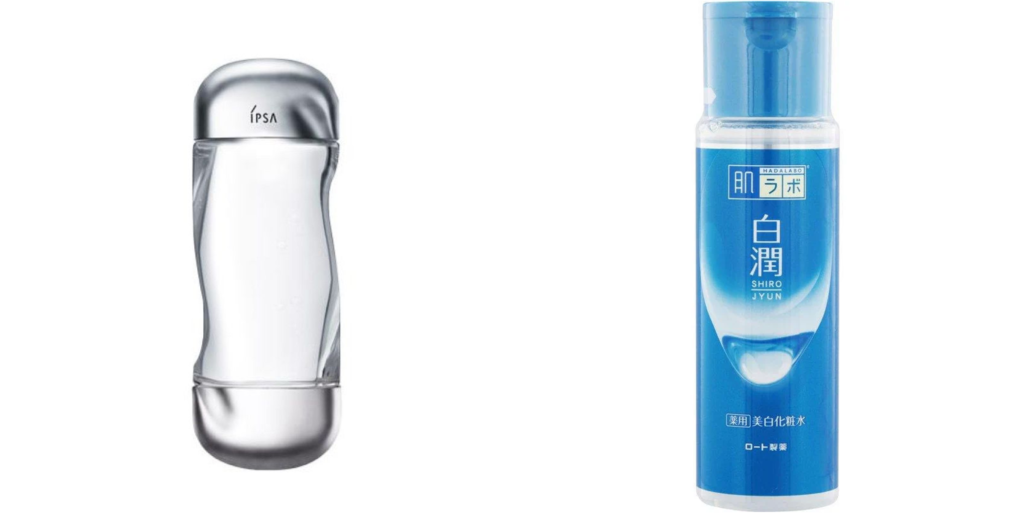
Here’s the at-a-glance breakdown before we dig into the labels.
| Product | Price & Volume | Shared Core Ingredients | Unique Active Ingredients | Best For |
|---|---|---|---|---|
| IPSA The Time Reset Aqua | US$44 — 200ml | Water, Dipropylene Glycol, Tranexamic Acid | Dipotassium Glycyrrhizate, Peony Root Extract, Rose Hip Extract, Marjoram Leaf Extract | Acne-prone, reactive, textured skin needing oil-balance + calming |
| Hada-Labo Shirojyun | US$17 — 170ml | Water, Dipropylene Glycol, Tranexamic Acid | Magnesium Ascorbyl Phosphate (Vitamin C), Coix (Job’s Tears) Extract, multi-depth Hyaluronic Acid | Budget-conscious brightening + hydration, normal/dry skin |
The Shared Core: Why the Rumor Isn’t Wrong
Here’s the part where the internet actually gets it right. Both toners are built on the same watery base: Water and Dipropylene Glycol kick off both ingredient lists, and both use Tranexamic Acid as their headline active.
Tranexamic Acid is a gentle, well-tolerated brightening ingredient that works by interrupting the pathway that triggers excess melanin production — making it a go-to for fading hyperpigmentation and evening out tone without the irritation risk of stronger acids. When two products both build around the same star active in a near-identical solvent base, that’s a legitimate overlap, not just marketing coincidence.
So yes: the core brightening mechanism really is shared. That’s the truth behind the dupe claim.
IPSA’s Acne-Fighting Edge
So what’s the extra US$27 buying you? IPSA layers in Dipotassium Glycyrrhizate (a licorice root derivative known for calming inflammation and redness) alongside a botanical trio: Paeonia Albiflora (Peony) Root Extract, Rosa Canina (Rose Hip) Fruit Extract, and Origanum Majorana (Marjoram) Leaf Extract.
This combination is what makes IPSA feel like more than “just a brightening toner.” It’s formulated to soothe reactive, easily-flushed skin and support texture concerns like closed comedones and rough patches — the kind of everyday redness and bumpiness that plain hydration alone doesn’t fix. If your skin runs sensitive, oily, or textured on top of dullness, this is the ingredient set doing that extra work.
Hada-Labo’s Brightening Powerhouse
Hada-Labo isn’t just riding on Tranexamic Acid alone, though. It pairs it with Magnesium Ascorbyl Phosphate, a stable vitamin C derivative that reinforces the brightening effect from a different angle, plus Coix Lacryma-Jobi (Job’s Tears) Seed Extract, a traditional skin-brightening and conditioning botanical.
On the hydration side, it brings Hada-Labo’s signature multi-molecular-weight hyaluronic acid approach — both Sodium Hyaluronate and Hydrolyzed Hyaluronic Acid — for hydration at different skin depths, plus Squalane for a light layer of lipid-mimicking moisture.
For a straightforward “brighten and hydrate” mission, this formula is doing genuinely serious work for the price.
The Verdict: Which One Should You Buy?
Buy Hada-Labo Shirojyun if: your main goal is fading dark spots, evening tone, and solid multi-depth hydration on a budget. For pure brightening-plus-hydration, this is a legitimate 10/10 functional dupe.
Invest in IPSA if: you deal with acne-prone or reactive skin, closed comedones, or textured patches alongside dullness. The added anti-inflammatory and sebum-balancing botanicals are doing a job Hada-Labo simply isn’t built for.
So the myth checks out — partially. Same brightening core, same gentle approach to hyperpigmentation. But IPSA’s extra ingredients are there to solve a different, more specific skin problem. Buy based on what your skin actually needs, not just the shared active on the label.
Disclaimer: The information and ingredient analysis provided in this article are for educational and informational purposes only. Everyone’s skin type and condition are different; readers should carefully assess their own individual needs and conduct a patch test before purchasing or using any new skincare. Every product has its unique formulation and characteristics. For specific product inquiries or claims, please contact the respective brand directly. For professional dermatological advice, diagnoses, or skin concerns, always consult a board-certified dermatologist or qualified healthcare professional.