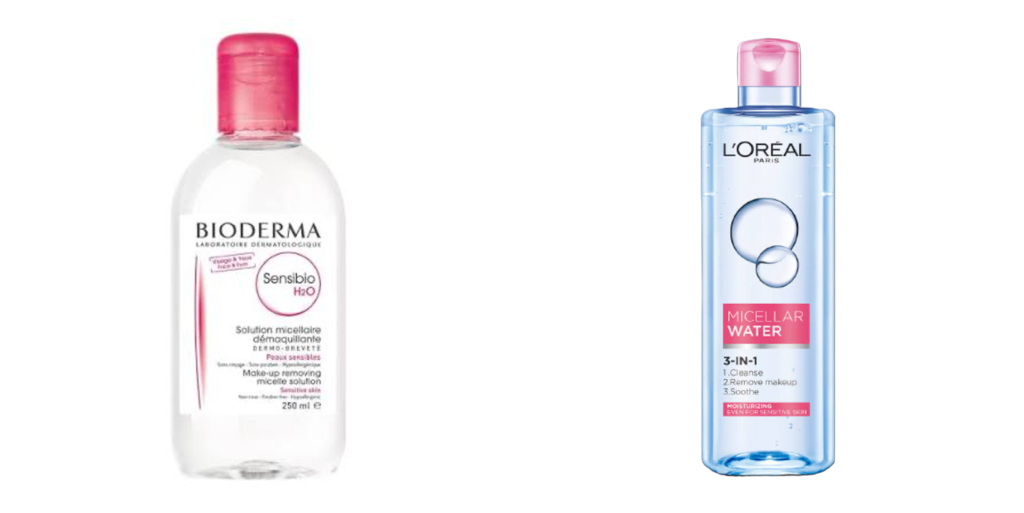
Every “dupe” infographic says these two micellar waters are “similar.” Similar how? Nobody ever explains.
We pulled both INCI lists from CosDNA and found something the graphics skip: they don’t clean the same way. Different surfactants, different extras, different skin types they suit best.
So is the $13 drugstore bottle a real stand-in for the $29 French legend? Let’s read the labels.
The Micellar Myth & The Price Gap
Bioderma Sensibio H2O is the OG of micellar water. It’s the pink-cap bottle every makeup artist and French pharmacy shelf made famous, and most of the drugstore versions you see today are riding the trend it started.
Here’s what the two cost in the US:
- Bioderma Sensibio H2O: ~$29 USD for 500ml
- L’Oréal Paris Micellar Water (Hydrating / Hyaluronic Acid): ~$13 USD for 400ml
The infographic circulating online flags a 2.3x price difference. That’s the sticker gap.
Now the volume math, and this time it works in Bioderma’s favor:
- Bioderma: about $5.80 per 100ml
- L’Oréal: about $3.25 per 100ml
Per ml, L’Oréal is roughly 1.8x cheaper, not 2.3x. Bioderma hands you 100ml more product, which shrinks the real gap.
Still a solid saving. The bigger question is whether the formula holds up.
Label check: the L’Oréal INCI we analyzed is the hyaluronic acid “Hydrating” version. L’Oréal sells several micellar water variants, so double-check your bottle before comparing.
The At-a-Glance Comparison
| Product | Price (USD) & Volume | The Cleansing Engine (Surfactants) | Star Hydrators/Soothers | Formulation Vibe |
|---|---|---|---|---|
| Bioderma Sensibio H2O | ~$29 / 500ml | PEG-6 Caprylic/Capric Glycerides | Fructooligosaccharides, Mannitol, Xylitol, Ginkgo Biloba Leaf Extract | Minimalist, soothing, sugar-based |
| L’Oréal Paris Micellar Water (Hydrating) | ~$13 / 400ml | Poloxamer 184 + Disodium Cocoamphodiacetate | Sodium Hyaluronate, Glycerin | Budget-friendly, hydration-forward |
The Cleansing Engine Reality Check
Quick science refresher. Micellar water works because surfactant molecules cluster into tiny spheres (micelles) that trap oil, makeup, and sunscreen and lift them off skin. The surfactant is the engine. Everything else is trim.
And here’s the reveal: these two run on different engines.
- Bioderma relies on PEG-6 Caprylic/Capric Glycerides, a non-ionic surfactant. It’s the second ingredient on the list, right behind water. It’s a single-surfactant setup, which is part of why the formula reads so clean.
- L’Oréal uses a duo: Poloxamer 184 (non-ionic) and Disodium Cocoamphodiacetate (a coconut-derived amphoteric surfactant). Both sit way down the list, so they’re present in small amounts.
Different surfactants mean different feel on the skin and a different rinse-off story. They are not chemical dupes, even if both remove a full face of makeup.
One more thing the infographics won’t tell you. Both bottles contain a quaternary ammonium preservative: Cetrimonium Bromide in Bioderma, Myrtrimonium Bromide in L’Oréal. Neither formula is preservative-free, and neither is uniquely “pure.”
Bioderma’s Soothing Matrix: Why the Pink Cap Costs More
Bioderma’s reputation with sensitive skin comes from what it adds around that single surfactant.
Look at the middle of the list:
- Fructooligosaccharides, Mannitol, and Xylitol: a trio of sugar-derived hydrators that support the skin’s comfort while you cleanse
- Ginkgo Biloba Leaf Extract: a botanical the brand pairs with its sugar complex for a calming effect
- Zinc Gluconate and Copper Sulfate: trace minerals that round out the formula
This is what you’re paying for. The formula is built to remove makeup without making skin feel tight or reactive, and it keeps the ingredient count low.
It’s not perfect. CosDNA’s list also shows Fragrance and Propylene Glycol, and one CosDNA reviewer reported breakouts and irritation. Micellar waters that don’t get rinsed off can leave a film on congested skin, so if you’re breakout-prone, a quick rinse or a follow-up cleanse is smart.
L’Oréal’s Hyaluronic Approach: Hydration First
L’Oréal took a different route. This one is built around how skin feels after you wipe.
The standout is Sodium Hyaluronate, sitting 5th on the list, ahead of the surfactants. Backed by Glycerin (#2), the formula is designed to leave skin feeling plump and comfortable rather than stripped.
Reality check: a wipe-off cleanser has very short contact time with your skin, so don’t expect serum-level hydration from the hyaluronic acid. Think of it as a comfort boost, not a moisturizer replacement.
Two things to know if your skin runs reactive. Hexylene Glycol and BHT both appear in the formula. Neither is a red flag for most people, but they’re worth noticing if you’re patch-testing everything.
The Verdict: Not Dupes, Both Effective
Let’s be clear: these are not exact dupes. Different surfactant engines, different supporting casts. Both still get the job done.
Get Bioderma if your skin is reactive, sensitive, or redness-prone and you want the gentlest, most minimal makeup remover on the shelf. It’s the reigning champion for that skin type, and the $29 is fair for 500ml of it.
Get L’Oréal if your skin is normal to dry and you want an effective, hydrating makeup remover that won’t strain your budget. At about $3.25 per 100ml, it’s a fantastic wallet-friendly option, and the Hyaluronic Acid adds a nice comfort factor.
Bottom line: sensitive skin, spend the extra. Everyone else, the $13 bottle earns its spot on your shelf.
So which side are you on: pink cap loyalist or drugstore convert? Tell us in the comments, and if you’re restocking, check current prices through our links before you buy.
Disclaimer: The information and ingredient analysis provided in this article are for educational and informational purposes only. Everyone’s skin type and condition are different; readers should carefully assess their own individual needs and conduct a patch test before purchasing or using any new skincare. Every product has its unique formulation and characteristics. For specific product inquiries or claims, please contact the respective brand directly. For professional dermatological advice, diagnoses, or skin concerns, always consult a board-certified dermatologist or qualified healthcare professional.