Here’s a plot twist most people miss while dark-spot-serum shopping: Eucerin and Nivea are owned by the exact same company. Beiersdorf runs both brands out of the same German labs, which means when their star ingredients line up, it’s not a coincidence — it’s a shared R&D budget.
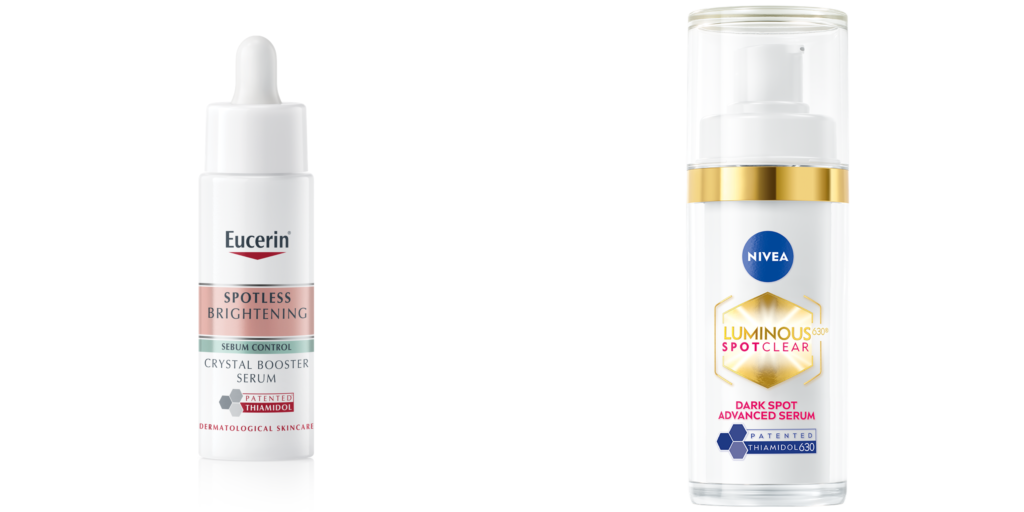
That’s exactly what’s happening with Eucerin’s Spotless Brightening Sebum Control Crystal Booster Serum (~$59 for 30ml) and Nivea’s LUMINOUS 630 Anti-Age & Spot Serum (~$38 for 30ml). A 1.5x price gap between two products with the same patented brightening technology. We ran both full INCI lists to find out what’s actually different.
The At-a-Glance Breakdown
| Eucerin Spotless Brightening | Nivea LUMINOUS 630 | |
|---|---|---|
| Price & Volume | ~$59 / 30ml | ~$38 / 30ml |
| The Shared Patented Active | Thiamidol (Isobutylamido Thiazolyl Resorcinol) | Thiamidol (Isobutylamido Thiazolyl Resorcinol) |
| Texture/Finish Ingredients | Alcohol Denat (high on list), Dimethicone | Shea Butter, Squalane, Cetearyl Alcohol |
| Best For | Oily & combination skin | Normal, dry & mature skin |
The Shared Nuclear Weapon: Thiamidol
This is the part that makes the “dupe” claim legit rather than wishful thinking.
Both serums are built around Isobutylamido Thiazolyl Resorcinol, better known by its trademarked name Thiamidol — a patented tyrosinase inhibitor that’s currently one of the most effective brightening ingredients you can buy without a prescription. Tyrosinase is the enzyme your skin uses to produce pigment, so blocking it is a more upstream (and often more effective) approach than ingredients that just exfoliate existing spots away.
Both formulas also include Sodium Hyaluronate for baseline hydration. Same active, same brand family, same core science. Where they split is texture.
Eucerin: Built for Oily Skin That Hates Heavy Serums
True to its “Sebum Control” name, Eucerin’s version puts Alcohol Denat high up on the ingredient list — third from the top, right after water and glycerin.
That placement matters. In INCI lists, ingredients are ranked by concentration, so Alcohol Denat this early means it’s doing real work here: fast absorption, a weightless finish, and zero greasy residue. It’s finished off with a touch of Dimethicone for smoothing, but the overall feel is built for skin that’s oily, combo, or just allergic to heavy serums.
Nivea: Built for Skin That Wants Richness With Its Results
Nivea skips the alcohol entirely and goes in the opposite direction, texture-wise.
The formula leans on Shea Butter (Butyrospermum Parkii Butter), Squalane, and Glycine Soja (Soybean) Germ Extract to add real emollience and barrier-nourishing benefits on top of the brightening work. It’s noticeably creamier and richer than Eucerin’s version — this is a serum that’s not afraid to also moisturize.
The Verdict: This Isn’t a Dupe, It’s a Texture Choice
Here’s the smart-shopper version of the truth: you are not paying $59 for better brightening. You’re paying for a different delivery system.
Buy Eucerin if: your skin is oily or combination and a heavy serum makes you break out or feel suffocated. You want the fade-your-spots results in a featherlight, fast-absorbing texture.
Buy Nivea if: your skin is normal, dry, or mature, and you’d rather your brightening serum also double as a nourishing, barrier-supporting step. Same Thiamidol, same tyrosinase-blocking science, $21 back in your pocket.
Both bottles are fighting the same dark spots with the same patented weapon. The only real question left is whether your skin wants a splash or a hug — which camp are you in?
Disclaimer: The information and ingredient analysis provided in this article are for educational and informational purposes only. Everyone’s skin type and condition are different; readers should carefully assess their own individual needs and conduct a patch test before purchasing or using any new skincare. Every product has its unique formulation and characteristics. For specific product inquiries or claims, please contact the respective brand directly. For professional dermatological advice, diagnoses, or skin concerns, always consult a board-certified dermatologist or qualified healthcare professional.